Local Projects
Education
Agriculture
Health
Women Empowerment
Project Activities
Objective 1:
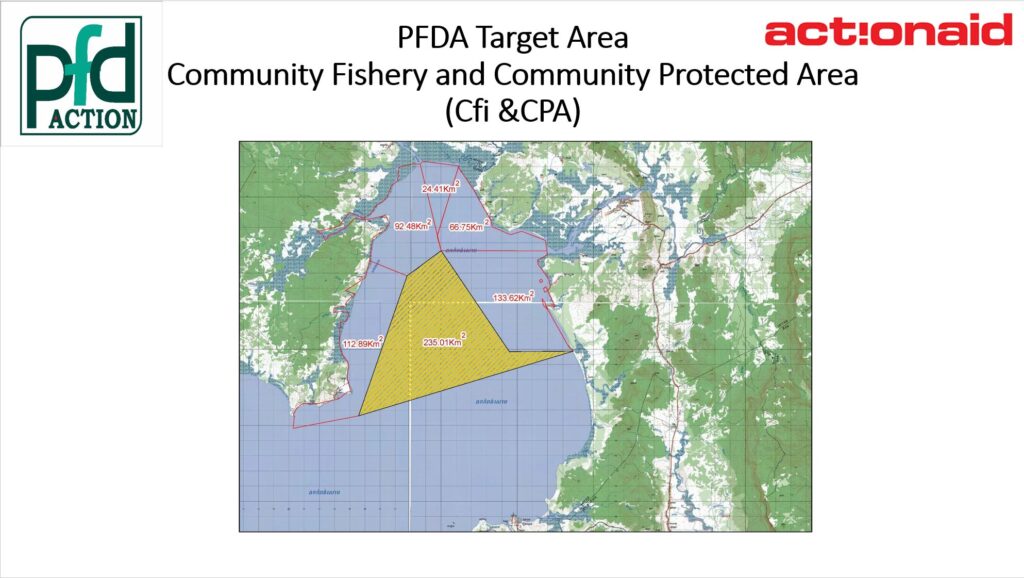
- To strengthen the community fishery
- To empower community forestry
- To improve agriculture businesses
Evidence of Change
- Functional community fisheries target communities
- Empowered community forestry in target communities
- Improved the family’s income through other agricultural businesses
Objective 2:
- To strengthen the school management functions and good governance
- To promote the school standard model
- To support school kits for vulnerable children and skills for dropout students
Evidence of Change
- Functional school management committee with good governance practices.
- Target primary schools applied good standards of the school model.
- Vulnerable children and dropout students’ access to school and life skills
Objective 3:
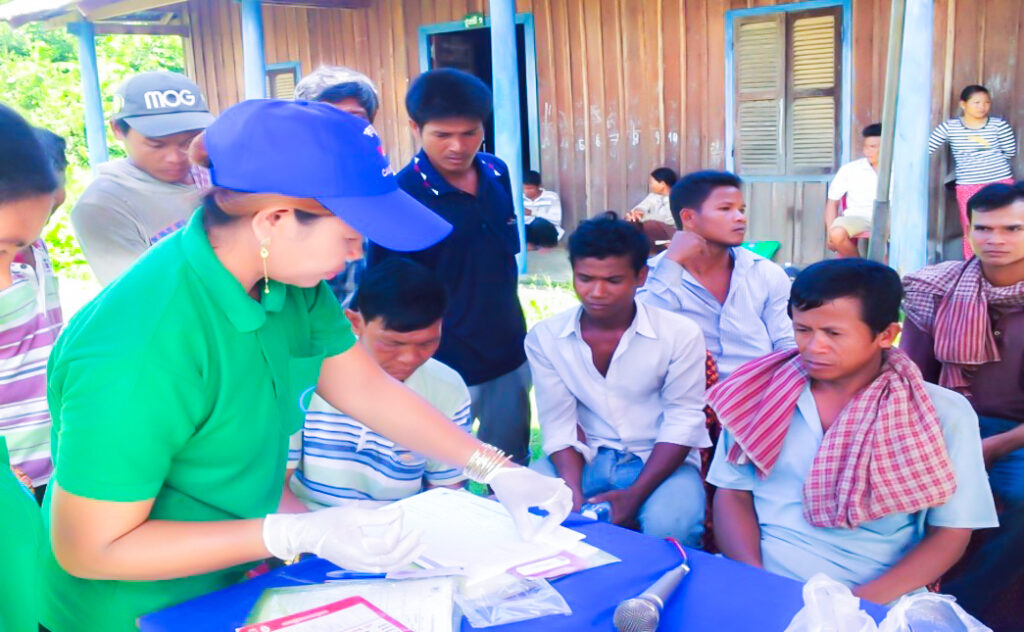
- To strengthen VHSGs' roles and responsibilities to promote better health awareness in villages and schools
- To facilitate community members, especially women and children, to get better health services
- To improve community health awareness in remote villages
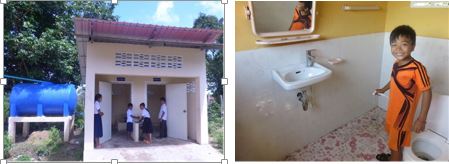
- To improve clean drinking water and sanitation facilities to vulnerable families
Evidence of Change
- Strengthened VHSGs to promote better health awareness in target villages
- Community members have better access to health services, especially women and children
- Improved community health awareness in remote villages
- Improved clean drinking water and sanitation facilities for vulnerable families
Objective 4:
- To strengthen the Commune Committee for Disaster Management
- To build community capacity on disaster risk management
- To improve emergency
- response mechanisms and systems
Evidence of Change
- Increased capacity and responsiveness of CCDM in DRR and CCA.
- Increased resilience and adaptive capacity of communities in DRR and CCA
- Functional emergency response mechanisms and systems
Objective 5:
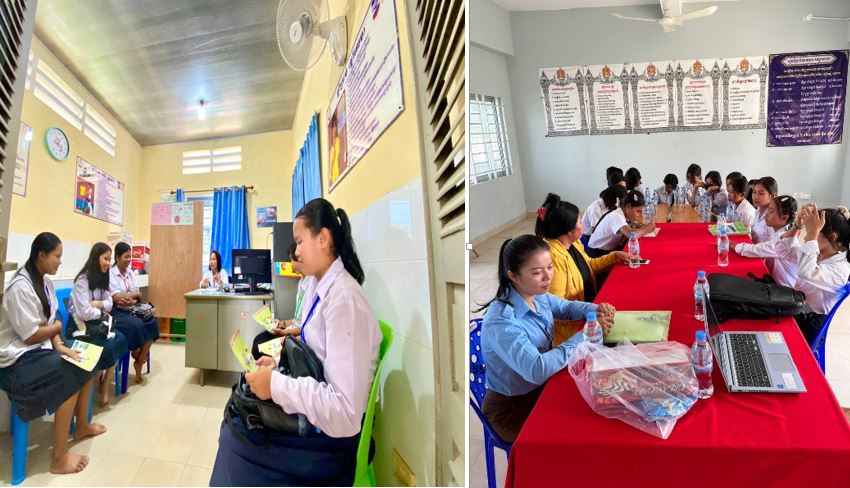
- To increase knowledge of young adolescents (in and out of school) on Sexual Reproductive Health.
- To increase access to SRH Services at health facilities for young adolescents
- To create an enabling environment for Adolescent Sexual and Reproductive Health in all target villages and schools
- To strengthen and to promote better National Protocol on Providing Reproductive Health and Youth Health Services in a Friendly Way to health service providers
- Intersection of SRH and climate change
Evidence of Change
- Develop a thorough understanding of how SRH and climate change intersect, particularly their impact on vulnerable populations.
- Acquire knowledge and tools incorporating SRH climate resilience
- Identify strategies and advocate for policies and programs that address the Intersection of SRH and climate change.
Work Experiences of PFDA (Story)
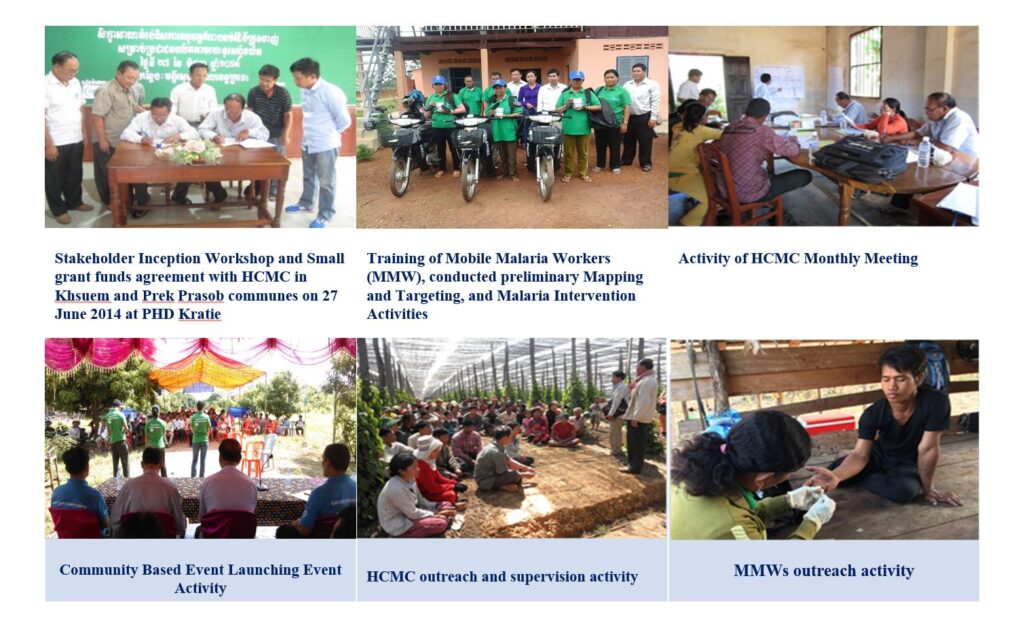
Malaria Program
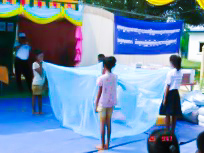
- CHADA received funds from the Global Fund to Fight AIDS, Tuberculosis and Malaria via PFD (INGO, based in Washington, USA) through a Memorandum of Agreement signed on the first of September 2008 up to August 2012, PFDA helps implement a school health education (SHE) program in Kratie, StungTreng, and Koh Kong provinces with its partners the Ministry of Education, Youth and Sport and the Ministry of Health. CHADA’s work benefits more than 15,000 primary school students a year in the three provinces of Kratie, Stung Treng, and Koh Kong, and their parents and family members.

Mobile 4 Malaria Project (M4M)
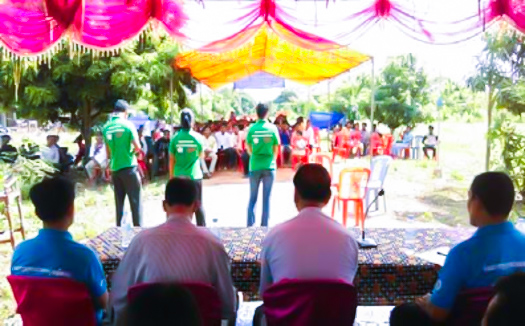
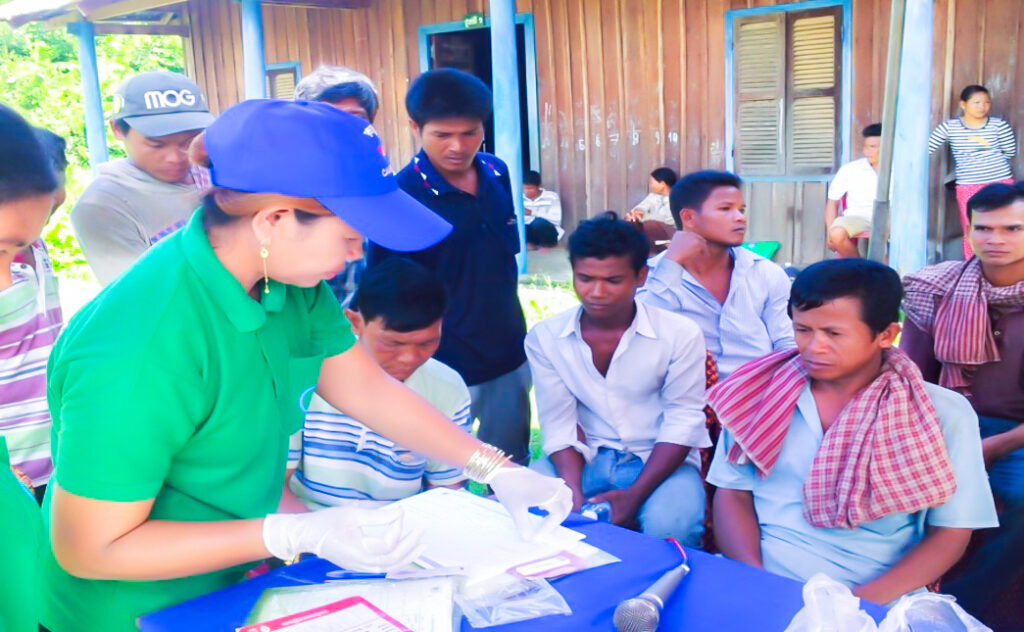
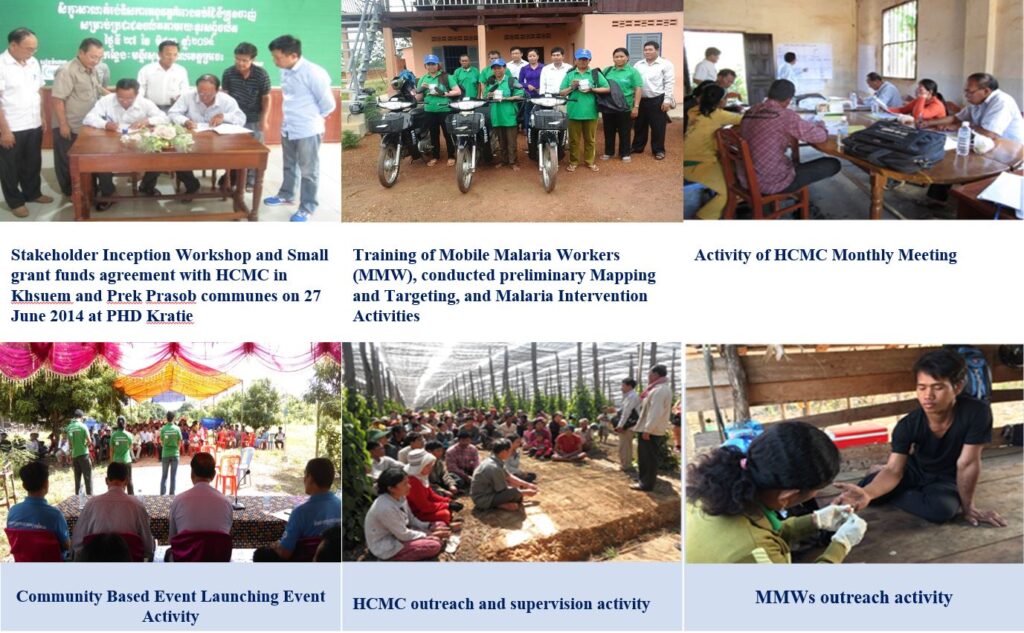
- USAID awarded CHADA to implement a one-year project entitled “Mobile Malaria Team using Mobile phone to reach Mobile Population” under the Fixed Obligation Grant (FOG) No. AID-442-F-14- 00001, “Mobile 4 Malaria project” for the period from 06 June 2014 to 05 June 2015. The total amount of this one-year award is USD 83,373. The goal of the project is to improve the prevention and control of malaria among the Mobile and Migrant Population through a Mobile Strategy model. The project is being implemented in two health center catchment areas of Ksim and Prek Prasob, Kratie.

Achievements for M4M Project
- Monthly meeting with AOR to update progress, challenges and find solution.
- In September 2014, CHADA officially get MOU with MOH on Mobile 4 Malaria Project Implementation.
- Developed Web based/ Android device on smart phone for data transfer on malaria positive active cases on GPS directly from MMWs to CNM-MIS
- Progressing agreement with iNSTEDD and MC will develop VERBOICE messages for SMS reminders Scheme.
Early Child Care and Development (ECCD), Nutrition and Water, Sanitation, and Hygiene support by Plan
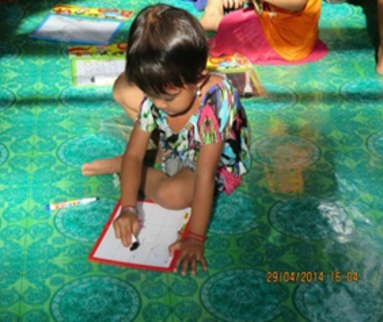
- CHADA receives funds from Plan International Cambodia through a partnership agreement to implement an Integrated Project on Early Child Care and Development (ECCD), Nutrition and Water, Sanitation and Hygiene in Kampong Cham Province for the period from 01 October 2012 to 30 September 2014.
- For the first year (Oct 2012 to Sep 2013), CHADA focused the implementation on the Community-Based Nutrition Project
- (CNBC) in this province, covering 50 rural villages in four communes and three health centers
- catmint areas. The project benefited directly at least 2,622 poor households of a total of 11,801 population, with 1,603 under five years children (824 female),
- and benefited indirectly at least 9,714 total households of a total.
WASH
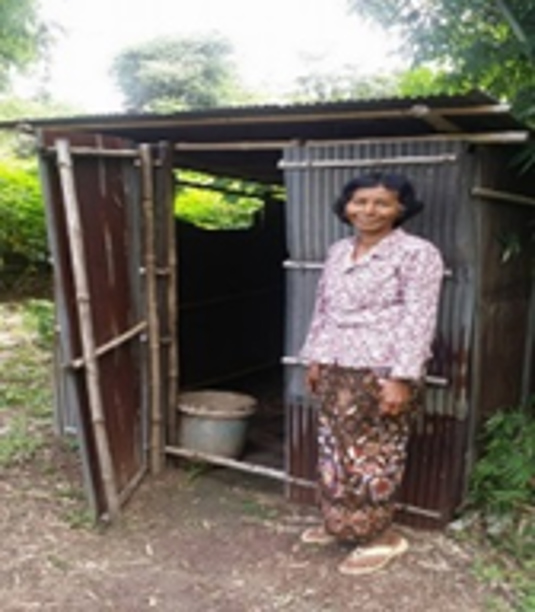
- Obviously family aunt Kong Chroeb is a 61 age, she is living in Pong Toeuk village ,she has the feeling a lonely as the female and a widow with occupation not sure of career as sale of dessert, sometime sale of Chinese noodle, small boutique, and has no land for farmer, she is a ID-poor2 in village with her daughter and son-in-law nowadays, the member in charge of her present, there are 03 girls in 01 sons, in charge of family, the first girl is a working at the farmer and rental-land from people in village, second son working at the farmer, cassava-labor and driver of tractor-labor. The third is a girls working at the sewing of factory in Phnom Penh, and last daughter is a career of sale of boutique with her in village. Speaking in front of her farm peasant and less nutritious and deepest of his own and walked with her child to sell labor to earn some income to support her daily life. Even nowadays, she has the face of farming received with about 0,50 hectare of rental-land from hectare farming, it is not enough, with her yields 60 bag/1 bag about 50 kilogram bushels of rice.
Nutrition
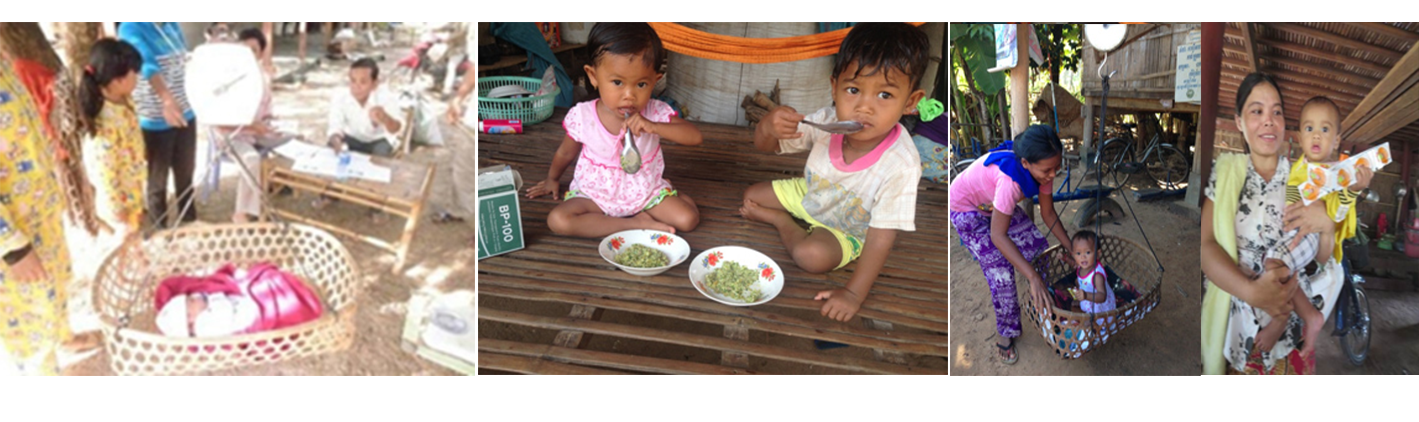
- 43,711 population with 5938 children under five years (3055 female). The focus of the year one program of CHADA was to reduce malnutrition among malnourished children, particularly the vulnerable ones aged under 24 months. Key program activities focused on TOT trainings on nutrition, Child Growth Monitoring Program (to screen for severe and moderate malnutrition), Nutrition Education and Rehabilitation Program (NERPs), high nutritious cooking demonstration, nutrition education to pregnant women and child care takers, child role plays on nutrition at village level, refer severe malnutrition cases to health center and home visit to severe cases
- For the second year (Oct 2013- Sept 2014), CHADA focuses its implementation on the integration of Early Child Care and Development, nutrition and water, sanitation and hygiene in the same 50 target villages, four communes and three health centers in Kampong Cham Province. The project will benefit directly at least 2,681 ID Poor I and II families, 1,665 children under five years children (800 girls), and benefit indirectly at least 9,744 families, with 5,997 under five-year-old children (3,204 girls). The focus of the year two program of CHADA is to improve access to integrated services (nutrition, WASH, and early stimulation) for children aged under 6, particularly from poor I and poor II and disability households, thus contributing to:
- Reduced < 5 child mortality rate.
- Reduced in newborn mortality rate.
- Reduced the prevalence of underweight and stunting among young children
- % of preschool children who entered grade 1 of primary school passed the average score
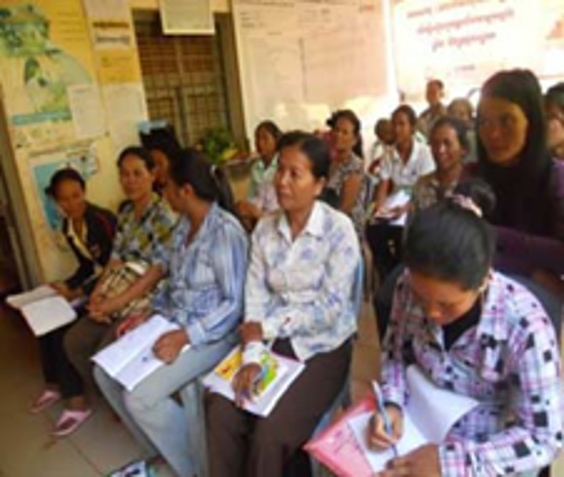
- Key program activities for year two focus on the same activities
- for nutrition as in year one, but add ECCD and WASH. These activities include:
- Strengthen the capacity of parents and caregivers, especially those from poor I and II on each specific theme, such as Early stimulation, Hygiene and sanitation, Positive deviance on feeding, three minimum standards of IYCF
- Complementary feedings, ANC Ante natal care, Initial and exclusive breastfeeding, PNC postnatal care, and Care of sick children (diarrhea, pneumonia).
- Establish and maintain formal/community-based/mobile pre-schools and bilingual preschools
- Improve the quality of preschools.
- Increase access to early stimulation learning for their development among children aged < 24 months, particularly from the poor ones.
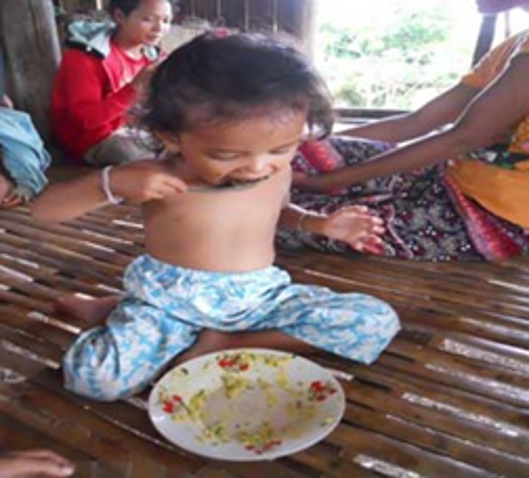
- Key program activities for year two focus on the same activities
- for nutrition as in year one, but add ECCD and WASH. These activities include:
- Strengthen the capacity of parents and caregivers, especially those from poor I and II on each specific theme, such as Early stimulation, Hygiene and sanitation, Positive deviance on feeding, three minimum standards of IYCF
- Complementary feedings, ANC Ante natal care, Initial and exclusive breastfeeding, PNC postnatal care, and Care of sick children (diarrhea, pneumonia).
- • Establish and maintain formal/community-based/mobile pre-schools and bilingual preschools
- • Improve the quality of preschools.
- • Increase access to early stimulation learning for their development among children aged < 24 months, particularly from the poor ones
- • Refer children with severely acute malnutrition to health facilities
- • Improve practices on nutrition and care of pregnant mothers, particularly the poor ones, during the pregnant period
- • Newborns receive initial breastfeeding and PNC/Exclusive Breastfeeding after birth
- • Children aged 6-23 months, particularly marginalized and poor ones, receive adequate complementary feeding
- • Establish Working Groups and Core Parental Groups with clear roles and responsibilities
- • Increase the number of villages declared ODF (Open Defecation Free)
- • Increase the practice of caregivers on hand-washing before feeding or handling food, and after defecating and drinking safe water. Protect children aged 5 through birth certificates and from any risk and dangers.
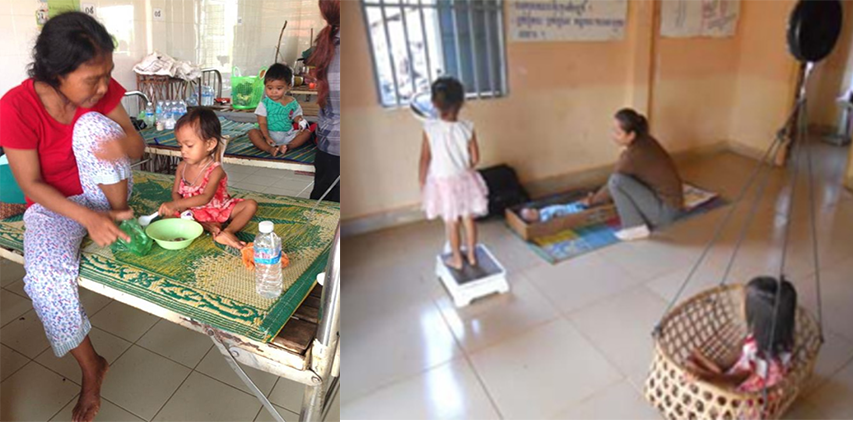
Cambodia Malaria Elimination Project (CMEP)
- Kravanh, Krakor, Sampov Meas and Bakan ODs in Pusat province. The project locations attract many migrants and mobile populations (MMPs) and land resources. Poverty appears to be the main factor for migration. Land development in forested areas, whether for agricultural activities or infrastructure construction, attracts landless people from non-malaria-endemic areas. MMPs involved in forest-related activities are a high-risk group for malaria and a hard-to-reach population. They constitute one of the main groups contributing to the potential emergence and spread of anti-malarial drug resistance. The key MMP groups at high risk of malaria in the above-mentioned ODs, as identified by Pursat (PHDs/ODs), are the seasonal workers and forest goers:
- The project was collaborated with and fill in the gaps of current CMEP operation and the HCs in the area and support the existing health workers if needed to augment the activities that are presently being done and to address gaps assisting in reaching those at risk who are difficult to reach to further the elimination of malaria and decrease the problems of drug resistance in these areas.
Cambodia Malaria Elimination Project (CMEP) sub-grant
Key Activity
- Health Education organizes community-based campaigns in villages with a high number of the migrant population or a high population of those who are mobile, or who live far from services
- ITNs distributed to the mobile/migrant population through VMWs/contact Points
- Mapping of new settlers/migrants, forest workers’/goers’ sites
- Refer suspected malaria patients to VMW/MMW and health facilities
- Report any malaria cases or outbreaks:
- Participation with a government meeting.

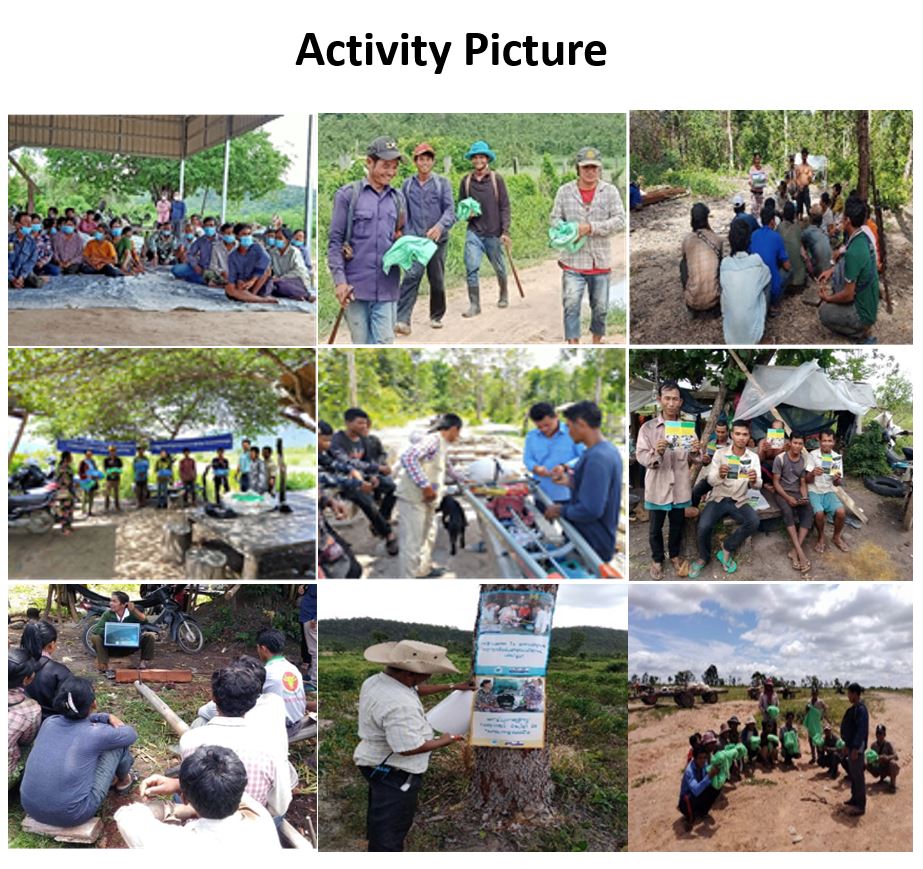
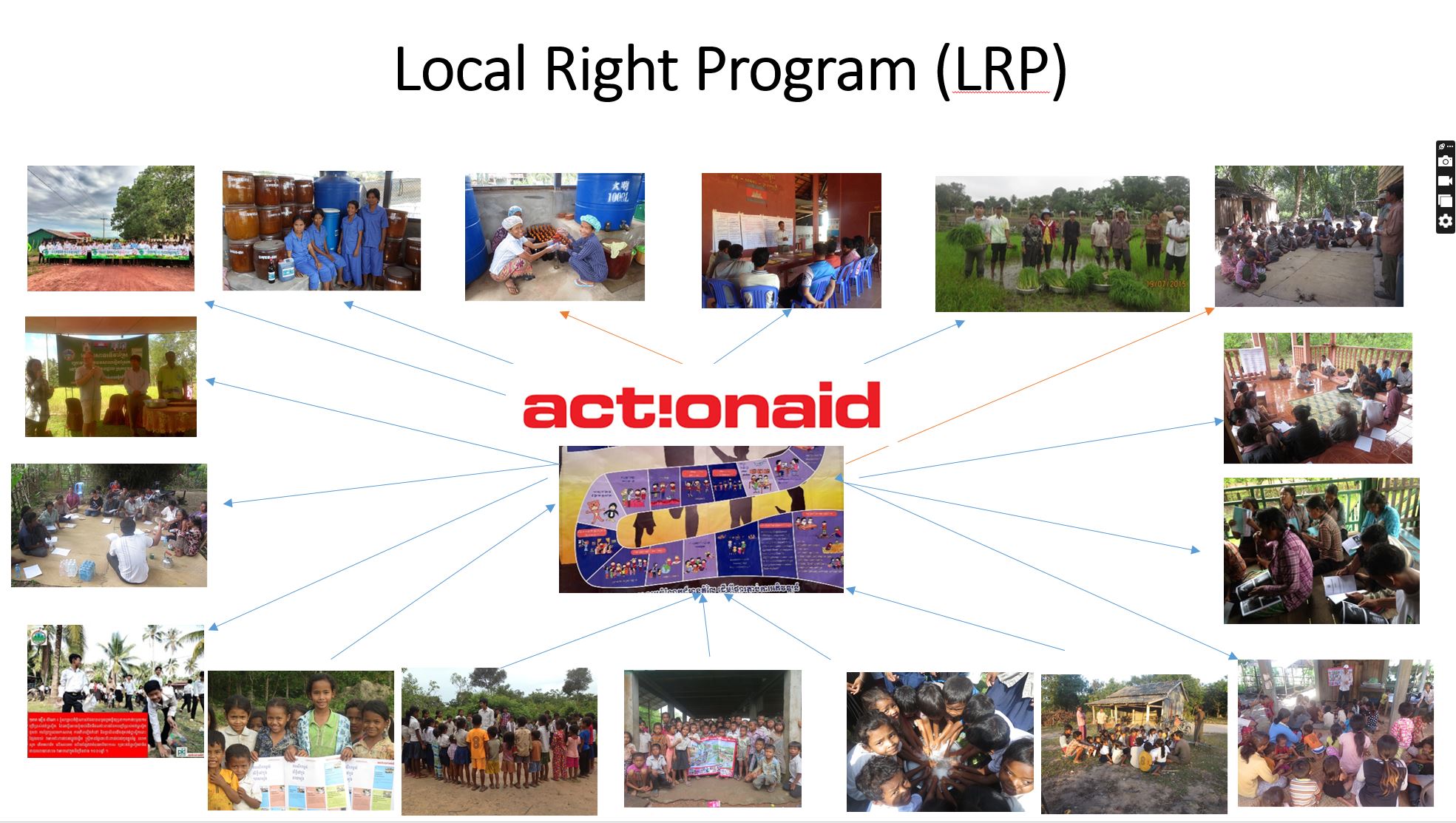

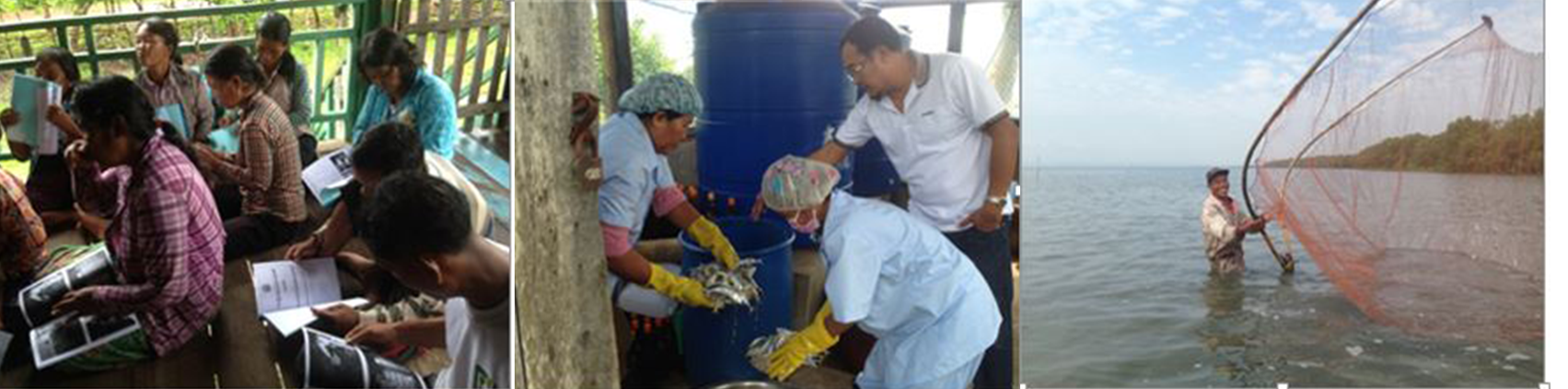
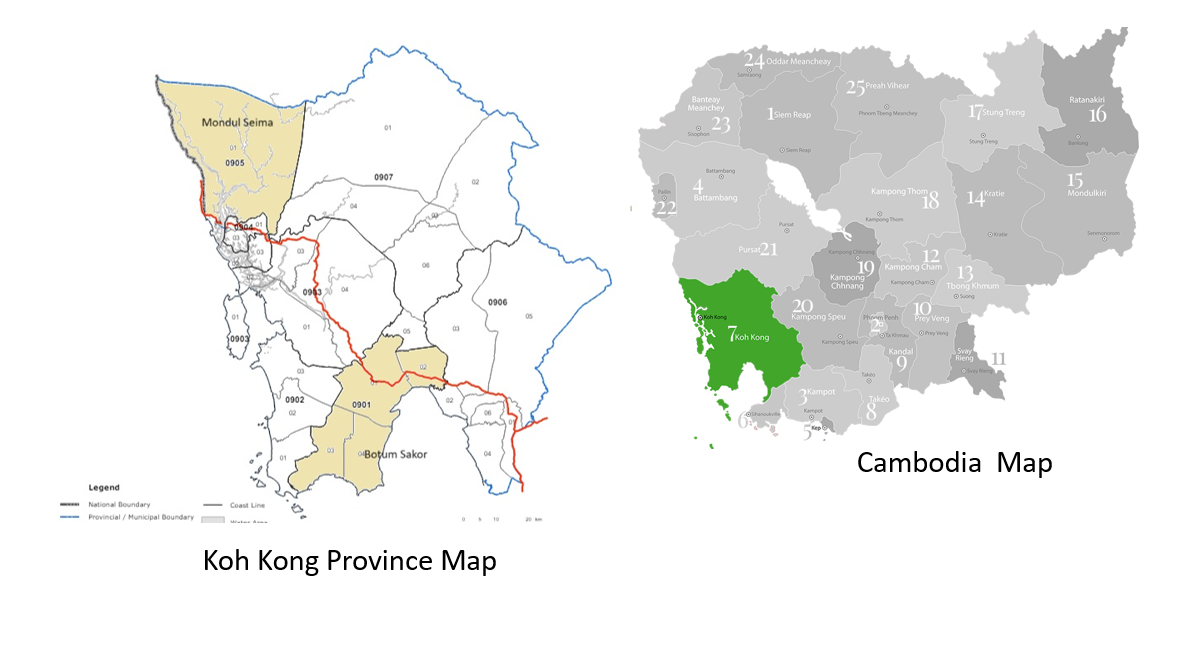
Project Name:“Building Community Ownership of the management of natural resources and improving access to education in Koh Kong province, Cambodia”
Funding Support: Swee-Im Ung & Nick 2013-2014
1. Project Intervention
- Project Outcome:
- 1) The community in 14 villages and key stakeholders (village chiefs, commune councils and school directors/ teachers) will be sensitized on the child sponsorship mechanism for the future sponsorship programme running.
- 2) A complete report of village needs assessment and a long-term village development of each target village is developed for future intervention.
2. Key Achievement
- 1) Sensitization/socialization of Child Sponsorship Program
- 1,247 people (777 women), and 1,193 children (560 girls), from 14 target villages have attended awareness raising on the child sponsorship mechanism. Within the project period we have conducted
- socialized meetings and awareness to:
- a)Three socialized meetings with 30 local authorities (4 women), from village chiefs, commune councilors, and school directors.
- b)13 socialized meetings with 26 teachers (11 women) and 901 school children (417 girls) in 13 schools and 12 villages.
- c)28 socialized meetings with community people in 14 villages, (Two meetings per village), with a total of 1,191 people (762 women), and 292 children (143 girls) attended the meetings.
- It was noticed that the local authority, the school management committee, teachers, children, and community people understood the mechanism to generate funds for supporting their community development. They were happy to have such a program intervention.
Building Community Ownership of the management of natural resource
Achievements include:
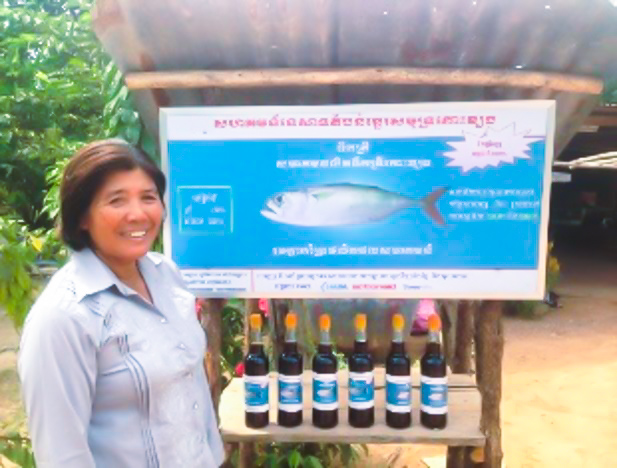
- A new fish sauce production group of 12 people (7 women) was formed and received training in fish sauce production techniques, which made them capable of managing and producing fish sauce. The community fish sauce is being sold in the Sre Ambel and Phnom Penh markets, which are highly valued as other fish sauces.
- The fishing community committee has cracked down on 19 crimes and continues to patrol to protect and conserve fishery resources.
- The fishing community area of the Koh Kong coastal area has been re-designated to 6,462 hectares with the approval of the district and khan authorities of the Koh Kong Provincial Fisheries Administration, and is currently in the process of being registered with the Ministry of Agriculture and Rural Affairs.
- Two nature protection community areas in Chikh Krom commune have received 929 hectares of community-managed land and have approval from the commune, district, and environmental authorities, and are in the process of being registered with the Ministry of Environment, and 521 hectares of land.
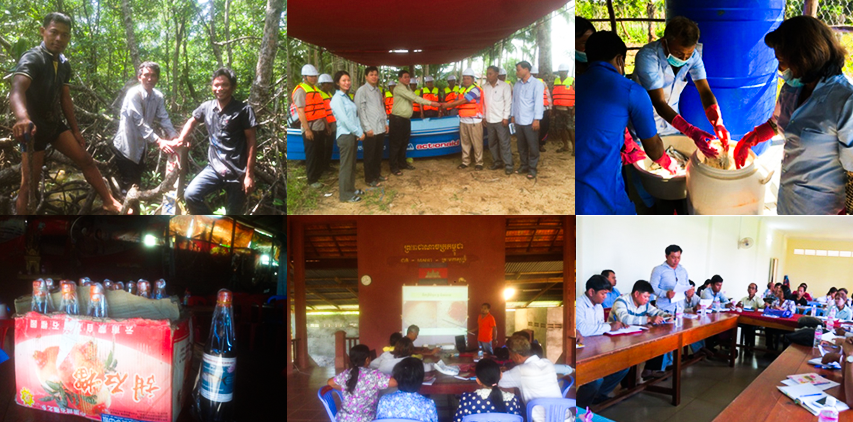
Transforming lives by increasing food and income for rural communities in Cambodia
- Through the project inception workshops everyone involved (staff members, local authorities and relevant community members) feel part of the project and feel the ownership and have engaged actively at different level. Local authority feel engaged and community people feel closer to them.
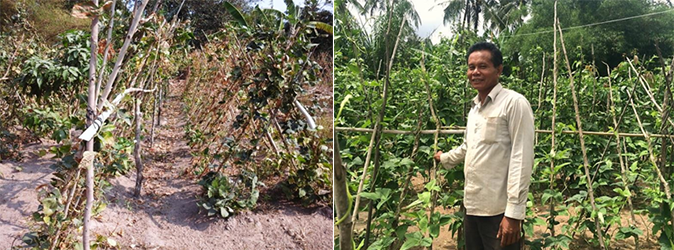
- Model farmers have changed mind set from traditional practice to new techniques/approach which is relevant with their context and resilient to the current climate changes. They aren’t grown for household consumption, but also selling in term of quality of products without using any chemical synthesis including pesticide, chemical fertilizer, and support nutrition to consumers according to promote open pollinated seed (most of these seeds, have been stored high nutrition rather than Hybrid seed as reference posted by Organic Consumers Association).
- Extended vegetable farmers have transformed their practices through regularly coaching by model farmer, their diversified crops grown at the farm by using Climate Resilience Sustainable Agriculture approach for supporting household consumption.
- Farmer networking has opportunity engaged with commune council, village chief, agriculture department staff, provincial and national fisheries administration officer, and NGOs, in order to raise their voice up on any issue to them for seeking on time solutions. Some of Community fisheries, have been understood on fishery law, received the registration process, demarcation of boundary, patrolling and seized illegal fishing gears from illegal activities.
- Women empowerment, 70% of women among model famers, have been engaged within the project, they are courageously applied the Climate Resilience Sustainable Agriculture approach for reducing the inappropriate of external inputs (Hybrid seed, chemical fertilizer, pesticide), happily raised their concern and received the constructive feedback for farm improvement, best practices sharing among the model and extended farmer through reflection, especially they are the one who earn family’s income through cash crops.
Swee- Im Ung and Nick Coutanche Project 2013
Possible Hinders for Children’s Education:
- Mao Kuy (30) and her husband, Chankean Kao (32) are farmers, living in Tani village, ChiKor Leu commune, Sreambel district. They have 3 children—an oldest son, Kea Kean (10), Hin Kean (8), and a youngest daughter (04). Kea Kean, and Hin Kean have just started his grade 1 recently. Meeting with his mother, Mao Kuy says, “I have 3 children. Kea Kean is our oldest son. When we are away from home, he is the one who looks after the younger siblings, cooks, and tends the cows. He helps us a lot with housework.”
- The information of school enrolment seems not to reach those who live far in a village. She continues, “I just enrolled my two sons at grade 1. I did not know it was time to enroll my sons unless the village chief told me. The school is about 3 km far from home. They attended school for about 2 weeks, and I moved them to an annex school located near my home. It was unsafe at all to walk to school that far. One of my neighbors was seriously hit by a motorbike. Anyway, at the annex school, the teacher is absent from his teaching so often. He visits his homeland for the rice harvest. When coming back from the homeland, he compensates for his absence by teaching more hours than usual per day. My sons can’t catch the lesson well because too many hours per day.”
- In fact, not many people want to be a teacher because being a teacher, especially for the primary teacher, learns very little money--15$-20$ per month. Many teachers suspend their teaching and find new income sources such as farming, starting a small local grocery shop in the village, and some work for a local NGO.
- She ends up, “Even if my oldest son goes to school, he still can help me with my housework work like collecting water and tending the cow. Some days he does not want to go to school, he stays at home and helps me do housework as well as tend the cow.”
- Yeak Sae, 50, is a farmer, owning two acres of farm land. Her husband is a 53-year-old man who is disabled due to a mine exploding during the civil war. And she has 5 children (4 girls) and one granddaughter. Three of her children dropped out of school to earn income, and her fourth child, 8 years old, is studying in grade 1, and the fifth child (04 years old) and her granddaughter (1 year old) are at home taking care of their parents.
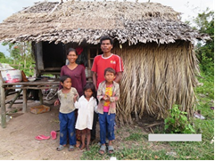
Case Study:
- Yeak Sae says, “I can farm only once a year due to having insufficient water integration. Annually, I get very little rice yield from my farming—100kg to 125kg, which can feed us for one month. We are challenging to food shortages for 11 months every year. Our children dropped school and find job to fulfill our stomach. My oldest daughter migrated to Siem Reap, but she never contacts to me at all. My second son, 18 years old, works as a worker on boat. And my third daughter (12 years old) and I (when I am free from farming) work for sugarcane plantation or rubber plantation. My husband stays at home looking after children and my granddaughter.” However, the money earned is not enough to support the whole family. The family’s living totally relies on the second child. Yeak and her third daughter earn nothing from May to October because the sugarcane and rubber plantation do not need workers; however, in November to April not every day they bring in due to someday workers are not needed.
- She adds, “I borrowed money from a micro-finance institute to build a bigger house because our old house is very small, leaky roof and walls. The newly built house is better to live in.” The newly built house is about 12 square, while the old one is 6 square. She ends up, “I dare to borrow from micro-finance because I rely on the money my son earns. He could at least give me 12.5$-25$ monthly, including the daily money I could bring in about 3$ (not every day, but just some days).”
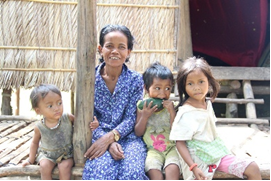
Case StudyWomen Empowerment through Income Generation
- Fish-sauce group consists of 16 members, 15 women, in Taben village, Chikhor Kroam commune, Sre Ambel district. The group was for (intention to) selling to generate income for members. Since FAO project ended in 2012, the group was still not recognized by any relevant Government agency, and the product was also not able to be sold publicly due to lack of recognition and no product label. Ms. Nuo Chhay, the group leader, explained, “After FAO project finished my group could not take this project forward, because we did not know how to ensure the quality of our product which is ac supported by Food and Agriculture Organization (FAO) in 2011 in setting up a structure, regulation, and skills for producing communal fish-sauce cepted in the public, as well as legal recognition from the government.
- In 2014, CHADA, ActionAid partner, selected Sre Ambel and Botum Sakor districts as its target area. Taben is one of 14 villages that CHADA targeted. Based on community assessment through participatory rural appraisal, CHADA identified problems and root causes of the community. The result from this assessment led to project action with funding support from Swee-Im and Nick. Strengthening the fish-sauce group is one of the project objectives. The project has reviewed and updated the regulations and processes of the group. It also provided further capacity building on group management and skills (fish-sauce processing and packaging), facilitated getting legal support from the Provincial Fishery Administration, and product quality was tested and labeled for marketing purposes. “I am very happy with the kind support to my group, and it has moved forward. Right now, we can produce and sell legally in the market with huge support from consumers. My group members and I have changed our mindset and behavior toward producing more for selling to get more income.” Chhay expressed confidence. In a recent visit, Swee-Im is impressed with the group work, and she donated another 10,000.00 Thai Bath (around USD:300.00) for the group to buy more jars for storing the fish sauce. Right now, 25 jars have been bought, and the group is in the process of buying more fish to increase their productivity. Chhay concluded, “Thankful to CHADA, ActionAid, and Swee-Im and Nick [donor] for their funding and commitment to make my group’s business move forward. I promise to strengthen my group on productivity and quality to meet market demand, and will share these lessons learnt with others in the community. I realized that this fish-sauce group will not only increase income for the members but also build capacity and confidence for women to be involved in community and public space, especially participatory and decision-making practices.”
Double rice yield through a new farming technique
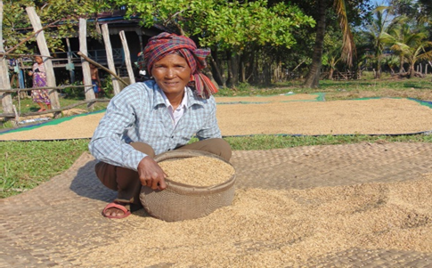
- Old farmer living in Tamkorn village said, “Most villagers here do rice farmingin a habitual way, which does not bring much yield. We use more seeds (97Kg/ha)and spent a lot of time and labor in the field, but resulted in minimal rice production(1300Kg/ha). Some of us sow the seeds instead of planting them. This rice farmingpractice was known from one to another without any proper base”.With the support of Benoy Foundation through ActionAid and our local partner(name of partner), Oum Brak was selected as a model farmer among 33 others who received support in 2015. Through this project, ActionAid and partners provided new farming skills and techniques called System of Rice Intensification (SRI). The training covers the rice life cycle in terms of variety and seed selection, land preparation, seed sowing, cultivation techniques, soil fertility management, water management, pest management, harvest and storage, and hands-on practices in the paddy field. The project also distributed rice seeds to model farmers.Oum Brak said, “I have tested this new technique with my small plot of farm land. As a result, the rice yield was double compared to the previous year (2500kg/ha). Applying SRI was easier, using fewer seeds (15kg/ha) and less labor in the field. This year, my family has enough rice to eat for the whole year, and we can also sell the remaining for the family’s income”.She added, “I feel so happy that ActionAid provided this farming skill to me. Now I am able to select the best seeds for planting and know how to make botanical pesticide as well. Next year, I plan to apply this technique to other plots of land and I will convince other farmers in my village to try this technique as well”.
Drip irrigation makes me love vegetable growing
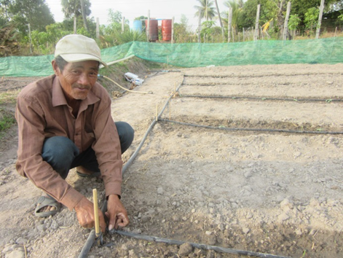
1. Mr. Ngem Sokhum (called Oum Sokhum), 65, is one of the poorest farmers in Kep Thmey Village, Beung Toukcommune, Tek Chhou district, Kampot province. His household comprises six members: a wife, a widowed daughter,two granddaughters, a grandson, and himself. His family has been living on growing vegetables for many yearsusing traditional methods. Oum Sokhum said, “Every day, I have to carry water, which is about 80-100 meters awayfrom the farm. I feel very exhausted as I am getting old now. If I don’t do this, my crops will not grow healthy or it will die.”
- Witnessing his effort in vegetable growing, Oum Sokum was chosen by the Benoy project to be a vegetable model farmer. The project managed by SAMAKY-Kampot, ActionAid’s local NGO partner in Kampot. It builds capacity of model farmers on climate resilience sustainable agriculture (CRSA) which includes production of compost fertilizer, soil improvement, seeds selection, crop nursery, water usage and management, botanical insect repelling, and seed storage. The project also provides crop seeds to model farmers to grow on their land. SAMAKY-Kampot cooperated with the International Development Enterprise (IDE) who supplies drip installation materials and provides installation technical support to model farmers.
- As a model farmer, Oum Sokhum decided to pilot a drip sizes 10x60 meters, which he had to pay himself for the water container. After three months, Oum Sokhum was able to notice the benefit of having this drip. He said “Drip saves my energy and time”. Before, it took him two to three hours to bring water to his farm. Now, he spends only 20- 30 minutes only to water his crops. This allows him time to perform other farm work such as seedling, transplanting, and catch insect pest. Oum Sokhum also noted other benefits. For example, the drip saves water as it allows water to flow through the vegetable stem drop by drop. This also keeps the soil moisturized all the time and prevents grass from growing; thus, allows vegetable to grow well. His family has now able to earn more income as the vegetable production has improved. This allows his family to use this income to buy more farming inputs such as bird dung and vegetable seeds and to buy more diversified food items. Satisfying all these benefits, Oum Sokhum managed to save some money from vegetable selling to expand the drip to another plot (800 square meters) which costs him around USD 100.
CRSA Changes My Life(Benoy 2025)
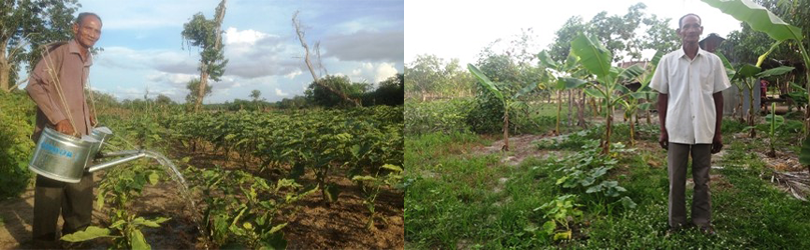
- Mr. Leak Khmao, 65, is one of poorest farmers in Trapang Kandorl village, Chikhor Leur commune, Sre Ambel district, Koh Kong province where most villagers are not interested in vegetable farming. Most agricultural products are imported from neighboring countries including Thailand and Vietnam which contaminated with high chemical substance. Khmao used to cultivate rice and grow some vegetable for his family daily consumption. “I do rice farming on 0.90 hectare of land, and I also grow pumpkin and morning glory on a plot of 120 square meters for my family living. I always used sack-fertilizer (chemical fertilizer) and pesticide to apply to my farm, especially to the vegetable I grow”, said Mr. Khmao.
- Through Benoy project, Mr. Leak Khmao, and two other farmers in the village, among 33 selected farmers (12 women), were selected, and provided Climate Resilient Sustainable Agriculture techniques (CRSA) with a serial of technical support such as training and practicing on various topics such as conventional farming and it impact; introduction to sustainable agriculture vs. current practice; multipurpose farm, soil improvement; composting, green manure; cropping system; EM; growing techniques in wet and dry season; botanical insect repelling; seeds selection and storage, and coaching, follow up, and reflection. Initial materials and seeds are also provided to them. Leak Khmao said, “I have gained knowledge and skills on how to grow diversification of vegetables, how to make natural fertilizer (both liquid and dried composts), and how to produce botanical (natural pesticide), then I apply into my farm. Right now I grow vegetables such as eggplant, cucumber, string bean, gourd, lemon grass, papaya and other crops. I stop using chemical substances in my farm anymore as it will affect directly to my health and my family, and also to other people who buy my produces.”
- Within this semester, and also helping-hand from his wife, Leak Khmao is growing vegetables on two plots of land with sizes 25mx30m and 35mx40m. As a result, his family has enough vegetables for household consumption and surplus for sale in his community. From vegatbale growing, his family can daily earn from 8,000.00 Riel (USD2.00) to 20,000.00 riels (USD5.00). With the income saved, recently he bought one small water-pump machine for irrigating his farm. Khmao continued; “People in the village love to buy my agricultural produces because my vegetables are delicious, and no worry about chemical substance. So I am very happy and this can encourage me to grow more, sell more, and then I get more profit too.”
- Having seen the profit he makes from vegetable farming, Khmao is now coaching his married daughter, who has separated house, to grow vegetable as well. Also, he is providing technical support and seeds to one of his neighbors, Mr. Pao who is very interested in growing vegetable. Khmao has a dream to link his produces to wider market, especially in Phnom Penh city as there is higher demand of chemical free production with higher price there.
Case study:
“Changing life from fishing to growing crops”
- Mr Soeung Samai, 47 years old, poor farmer lives in Prek Thnot village, Prek Thnot Commune, Tek Chhou district, Kampot province, said “I choose to grow vegetable at home because it helps me to save money from buying at market and people in community like to buy my organic vegetable”.
- Mr Samai used to be a fisher man to earn income to feed his wife and 8 children (3 of them are girls). Being a fisherman is tough because he has to work around 10km from home, his family and children are left alone while he is at sea. He decided to quite the job as a fisher man in 2013 due to many illegal fishing cases increasing and no one available to take care of his sick wife and 8 children. Meanwhile, he starts growing crops around his house on the 15x20m plot of land and using his own techniques through traditional growing crops. He added “Growing crops is difficult because I have never grown it before but due to the challenges and I want to be close with my family, I have to try my best to grow crops. I earned from 2,000 to 5000 Riel (USD 0.5 to 1.25 USD) per day from selling my products”.
- Having seen Samai’s commitment and willingness to take part in agriculture life, he is selected as a model farmer in the Transforming lives by increasing food and income for rural communities in Cambodia project. Samaky-Kampot selected him through visiting his farm and interviewing him to ask about his vegetable practice, and observe his crops. Moreover, He is the only farmer who grows vegetables in the dry season and rainy season. He is a poor farmer but he has the commitment to grow his vegetables.
- As part of the project, Mr Samai received capacity building on Climate Resilience Sustainable Agriculture (CRSA) skills and techniques including compost fertilizer production, soil improvement, seeds selection, crop nursery, water usage and water management, botanical insect repelling, seed storage, and received crop seeds to grow on his land. Through the regular monitoring, we can see that Mr Samai improves his vegetable growing habit and takes care of his crops very well. “After I received training on CRSA and produce my own compost fertilizer, I understand more on the technique to grow vegetable and my produces is better than before when I start to use natural fertilizer. I want to grow more and different types of vegetable on my land. From selling my crops, now, I can earn 5,000 Riel (1.25USD) per day. I plan to enlarge my growing plan to 15x25m.” said Mr Samai.
- Currently, pests (ants and worms) and water shortage in dry season are the major challenges that Samai faces in his farming. However, he has committed that “I plan to grow more crops by using natural fertilizer and to find solutions to address those challenges I have. Specially, I want to know the technique to keep my own seed”. IN the near future Mr samai said “I plan to grow more crops by using natural fertilizer and to find solutions to address those challenges I have. Specially, I want to know the technique to keep my own seed”.
- In the future SAMAKY -Kampot is going to take him as a good role model for other farmers to learn from and to share experience because he has a commitment in growing vegetables in every season. Moreover, he is one among the selected farmers who will apply the drip irrigation system.
Community Ownership
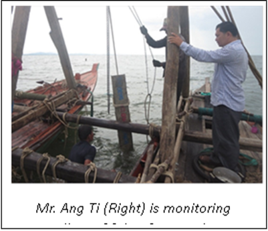
- Villages of Chikhor Kroam commune make a living. Before the community was set up, there were many illegal activities such as illegal fishing and mangrove deforestation for personal purposes. The CFi had set up since 2003 with support from the American Friends Service Committee (AFSC), and then Food and Agriculture Organization (FAO) until 2012. Within nine years, the CFi has structure, regulation, and membership in place. Fisher folks in three villages are members of the community. The CFi committee has functioned to manage and protect that resource. During this period, illegal activities have reduced as the committee cooperated with the Provincial Fishery Administration for patrolling the area regularly.
- Since AFSC and FAO left the area, the management of the CFi has been less active than before. Some members left the committee for their own reasons. The committee has no funds to support routine activities such as meetings, networking, patrolling, setting up a conservation zone, or educating people about the advantages of CFi, etc. Mr. Ang Ti, newly re-elected as chief of the CFi committee, said, “While solidarity has broken, the CFi committee was hardly gathered for discussion or patrolling the community. Therefore, illegal activities in the community increased, then resources were reduced dramatically, and the fisher folks caught fewer fish or crabs from time to time.”
- CHADA, ActionAid partner, has implemented various project interventions to make the community stronger and more active. The CFi committee has been re-elected and strengthened, community people were more aware of their resource conservation and utilization, and one conservation zone was established for fish refuge. Fisherfolk families in six villages of Chikor Kroam commune have registered as members of the community. “After the support from CHADA, the committee is full functioning. We organize regular meetings to review and reflect on team management and issues in the community. The committee also cooperates with local authorities and Provincial Fishery Administration to resolve any issues in the community as well as the patrolling activities,” said Mr. Ti.
- The fisher folks aquatic resources are starting to increase because illegal activities has reduced, fish-refugee camp setup, and the fisher folks have more participation in conservation and protection of the resources. Ti added, “I am honored with the funding support from Swee-Im and Nick that helps increase resources in my community. This will contribute to improving the living conditions of the fisherfolk. I commit to reinforcing my team to be stronger to ensure the sustainable use of the resources to end poverty in my community.”
Hand-held fishing and conservation areas:
- Mr. Man Mon, 54 years old, has 7 children (3 daughters) and is a poor fisherman living in Phum An Chhaet, Chi Kh Krom Commune, Sre Ambel District, Koh Kong Province. Today, Mr. Poo is a manual fisherman. He usually works in the fishing community by pulling and pushing fish. Mr. Poo said, “When I go to push fish, I am very tired, and I only catch 1 to 2 kilos of fish, which I can sell for 10,000 to 12,000 riels a day. The catch is irregular because the fish are not abundant. Some days, I can’t find any because there are many trawlers trawling through the conservation area, dragging all the fish, big and small.” Because his income is not enough to support his family, Mr. Poo stopped his son from studying at the age of 12 to work with his boss to buy seafood to earn money to help support his family. Also, in 2014, CHADA received a project from Ms. SWEE-IM and Mr. NICK through ActionAid on strengthening the capacity of fishing communities and erecting 40 conservation boundaries. After receiving the project from SW...

Improving access to quality education for children in Kampot and Koh Kong provinces, Cambodia, through enhancing school infrastructures (Guy’s Trust Project)
- A three-room primary school is currently under construction, about 70% complete, in Chamkar Prek Sub-village of Tany Village, Chikhleu Commune, Sre Ambel District. The construction is under the supervision of the Procurement Committee (District Education Office, Commune Council, School Support Committee, School Principal) and the Department of Education.”

Case Study: Child club members (Tavola Project)
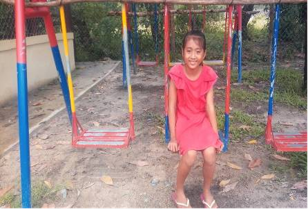
- As a second daughter living with a poor family that have many members, the girl named Jing Lina, 12 years old, grade 6, studies at Trapaing Kandoal primary school, is very hard and challenging. Her parents as farmers in this village, who always went out to find a job far from the village to support their family. Not only does Lina study, always helps her mother to do chores and housework, including vegetable planting. Lina said, « Before, I didn’t like school, I didn’t like reading books, and I had poor attendance... I don’t want to join any event in my school or in my village..I don’t know too my self at the time. But when I hear my friend talking about the Child club, the sound is very funny to me, and I started participating, and yes, happy happy activities. I remember at the time that changed my life during the social life skills workshop in June 2016, when I became a member. I can learn a lot of art skills, drawing, painting role play, and now I have a good understanding of the core value of Education, and I can motivate my friend to go to school regularly. ». After she looked at the playground and she said, « Before, I didn’t like social activities, I like to stay alone, no friends, I like quiet places....but now I like my school, my club, even though I am the only member but I can assist my leader when they conduct any evens like hygien and sanitation or Child Rights and ”
Improving access to quality education for children in Koh Kong province, Cambodia
Progress against objectives:
Build a five-room school building in Chhouk village, Koh Kong province.
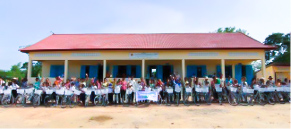
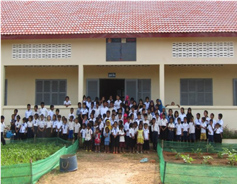
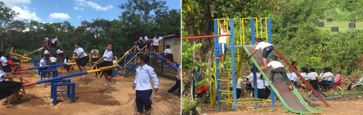
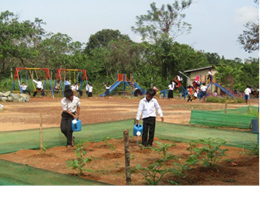
- As planned, the new school building with 5 classrooms was totally completed in July 2017. Since then, 91 children have enjoyed learning facilities in safe and appropriate classrooms. As of now, it has increased up to 139 children (67 girls), who benefited from this key achievement of the project. By having increased classrooms and children, the Provincial Office of Education (POE) has deployed 2 more teachers to support this school. Currently, there are 6 teachers in place. Some other improvements to the school have also been made to support children learning to the best environment possible, such as improving the surroundings of the school building, connecting electricity for school use, and installing a water system. These achievements happened as a result of increased participation and involvement children are so excited about this new school building.”
Form Children’s Action Clubs, including workshops on social skills and artistic activities.
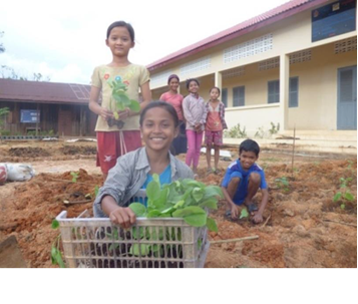
- In July 2017, the project organized a workshop on local life skills programme reinforcement to Children’s Action Club members and some selected school children from grades 5 & 6. The workshop provided knowledge on organic vegetable growing techniques, including hands-on practices. As a result, the participating children have practically planted crops in learning gardens at the school compound. They acquired real practices of life skills programme from school, which could be replicated at home after school to help support the livelihoods of their families as well..”
Key Success
- In Koh Kong, fisherfolk are aware of the Fishery Law and the management of the Fishery Community. They advocated for protecting the conservation zone. They discussed with the Commune Council to ban the tourist project invested by a private company to develop a tourist zone in Koh Kjong Island (Snail Island) where fisherfolk get access to sea resources for their daily livelihood. Afterward, this project is pending now due to this complaint.
- In Kampot, SAMAKY in collaboration with the Commune Council of Trapeaing Ropov had engaged with the owner of the local market named Trapeaing Ropov to pilot for 3 months for the local shop where the market group sell their product. The market group is well organized among 10 farmers, and a management committee is elected. Five farmers (2 women) are elected as the management committee, comprised of the Chef, Vice Chef, Treasurer, Collector, and Collector. This market group will use start-up capital of 500,000 Riel or 125 USD to buy the vegetables and dried shrimp from farmers. The profit/income from this business will be attributed 6% to the Chef of Market Group, 6% to the Vice-Chief, 6% to the Treasurer, 38% to the Seller, 36% to the collector, 3% to farmers supplying yearly vegetables over than 100KG and 5% to savings and investment capital. This is a kind of business model settled by a market group as community organizing
What impact have we had during this reporting period? (Benoy 2017):
- Women beyond fishing and rice farming and vegetables. This processing group will supply their product to the local shop in Tropeaing Ropov Market that will be managed by Market Group. This group will extend production where there are orders from the customers through this local shop.
- Mobilisation of market group for market access: 2 market groups in Kampot and Kong are organized and managed by farmers. Beyond farming production, farmers are willing to promote their chemical-free products through the local shop and mobile market. So they can increase the volume of production and have the power to bargain the selling price with local traders and middlemen. Moreover, 40% of women are engaged in this market group, where they generate more benefits/income from this activity.
Project Achievements
To Date
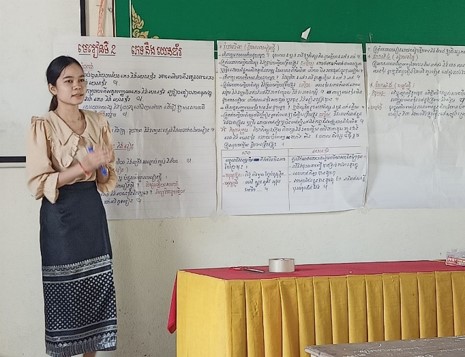
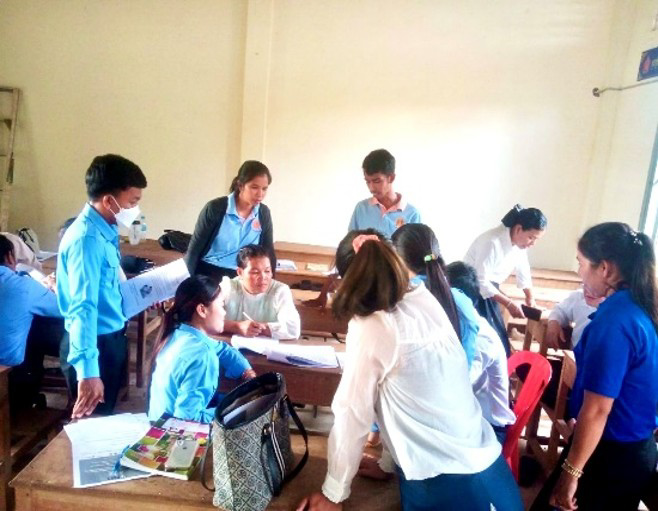
73 Peer Educators recruited and Trained on SRH

Project Achievements
To Date
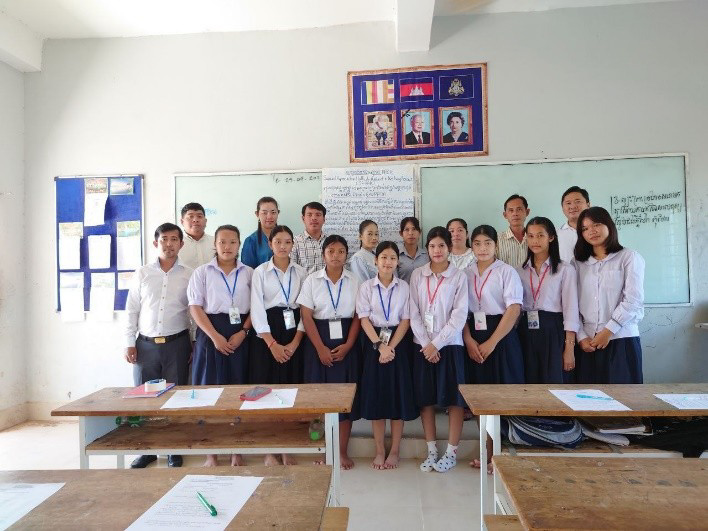
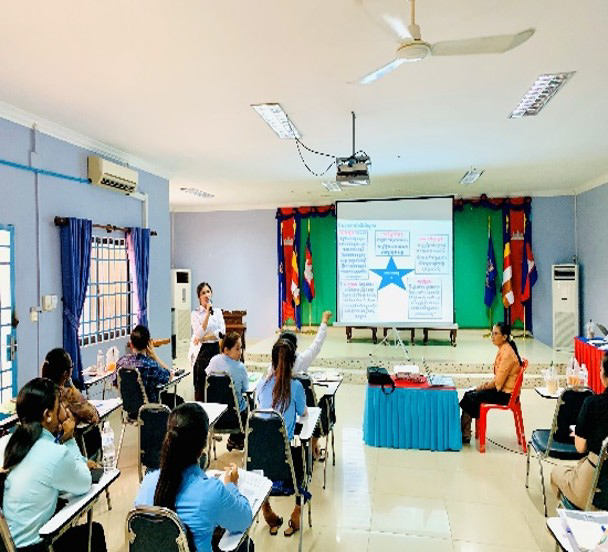
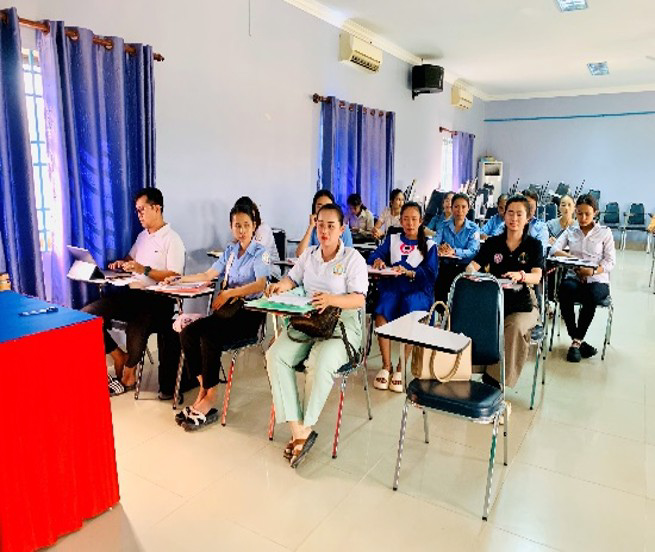
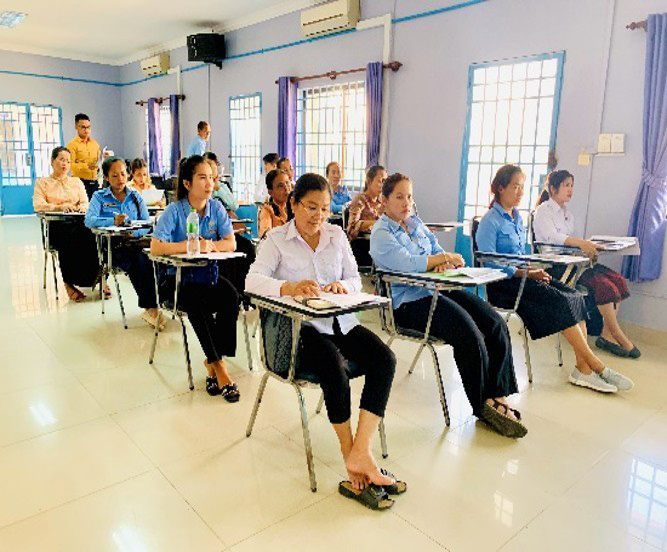
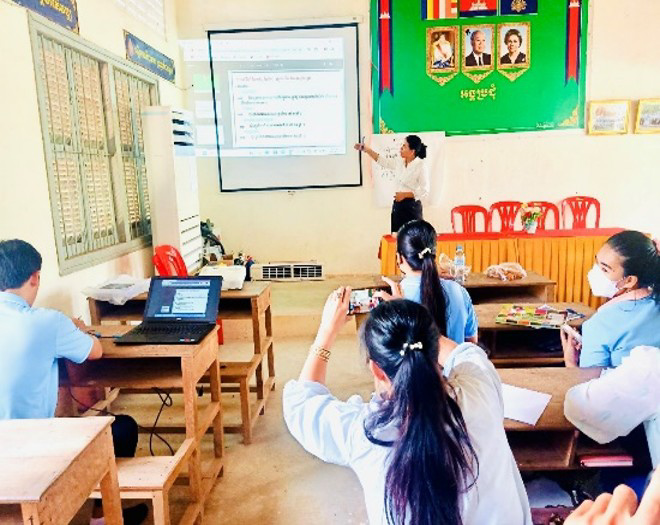
19 Health Center Staff Trained on SRH
Project Achievements
To Date
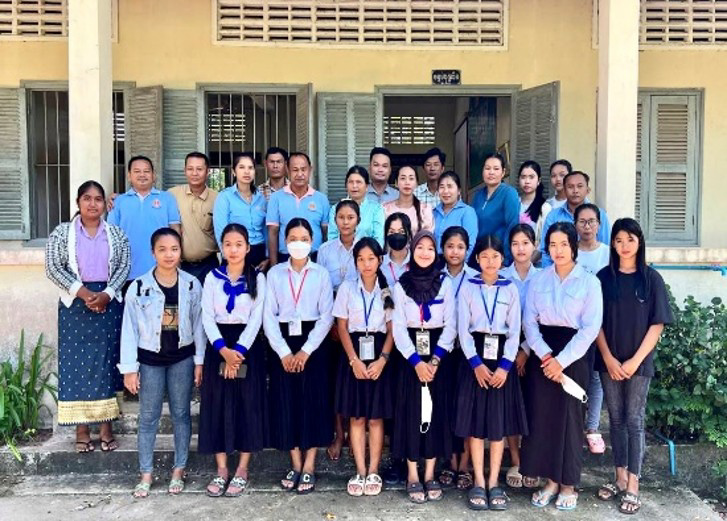
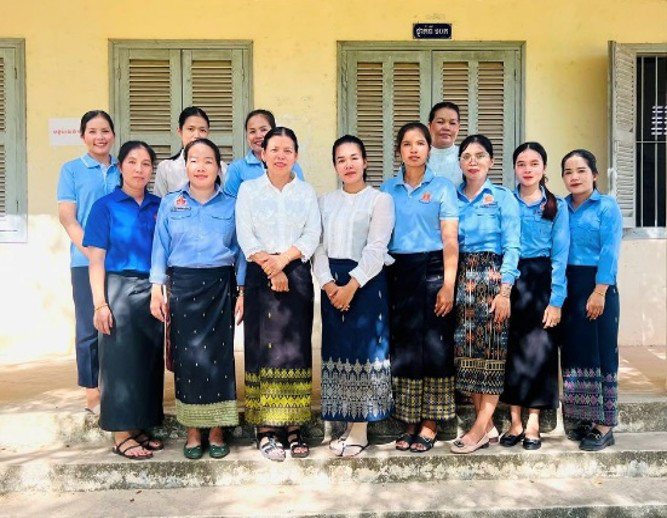
26 school teachers trained on SRH
Project Achievements
To Date
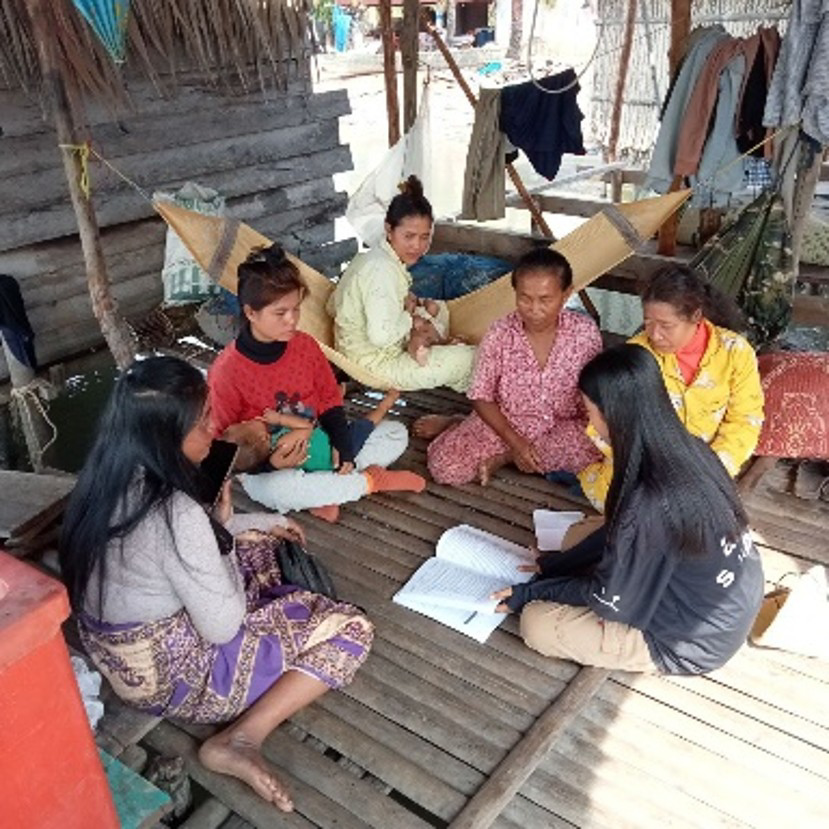
Peer Education: 1,860 adolescents (1,228 female) received SRH health education from PE (1,208 in-school; 441 in community
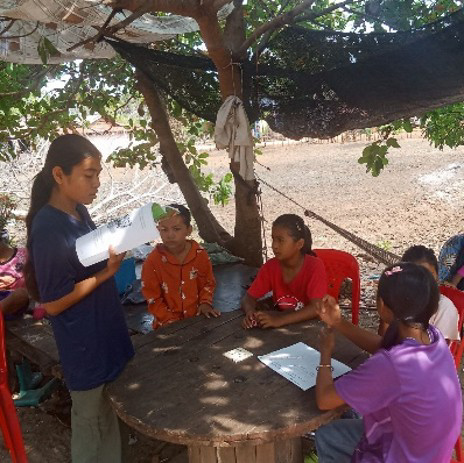
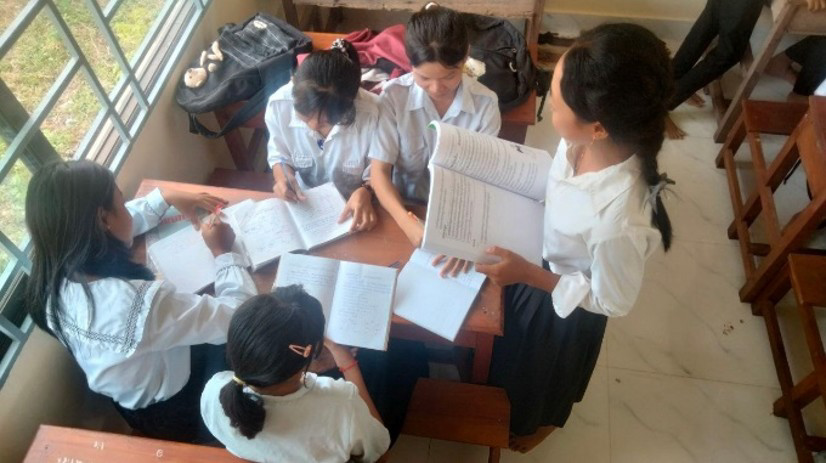
Project Achievements
To Date
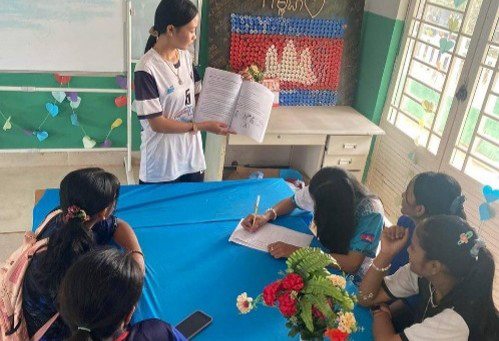
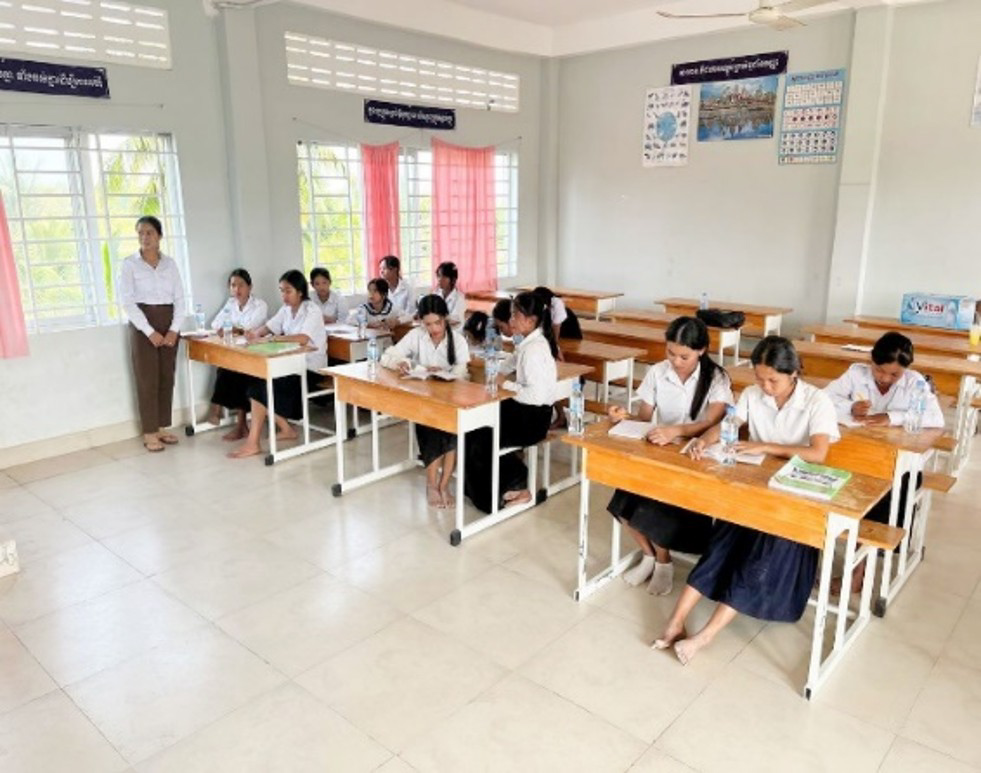
Education Session in schools: 8,693 (4,644 female) adolescents
received education sessions on SRH in schools.


Project Achievements
To Date
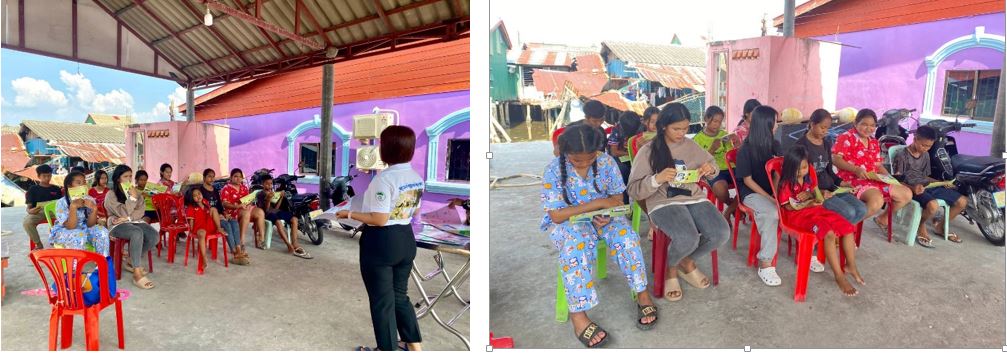
Community Outreach: 16 Community Outreach conducted by health center
staff reaching 183 adolescents with SRH.
Project Achievements
To Date
Young Female Group Discussion: 22 group discussions held reaching 235 adolescents on SRH.